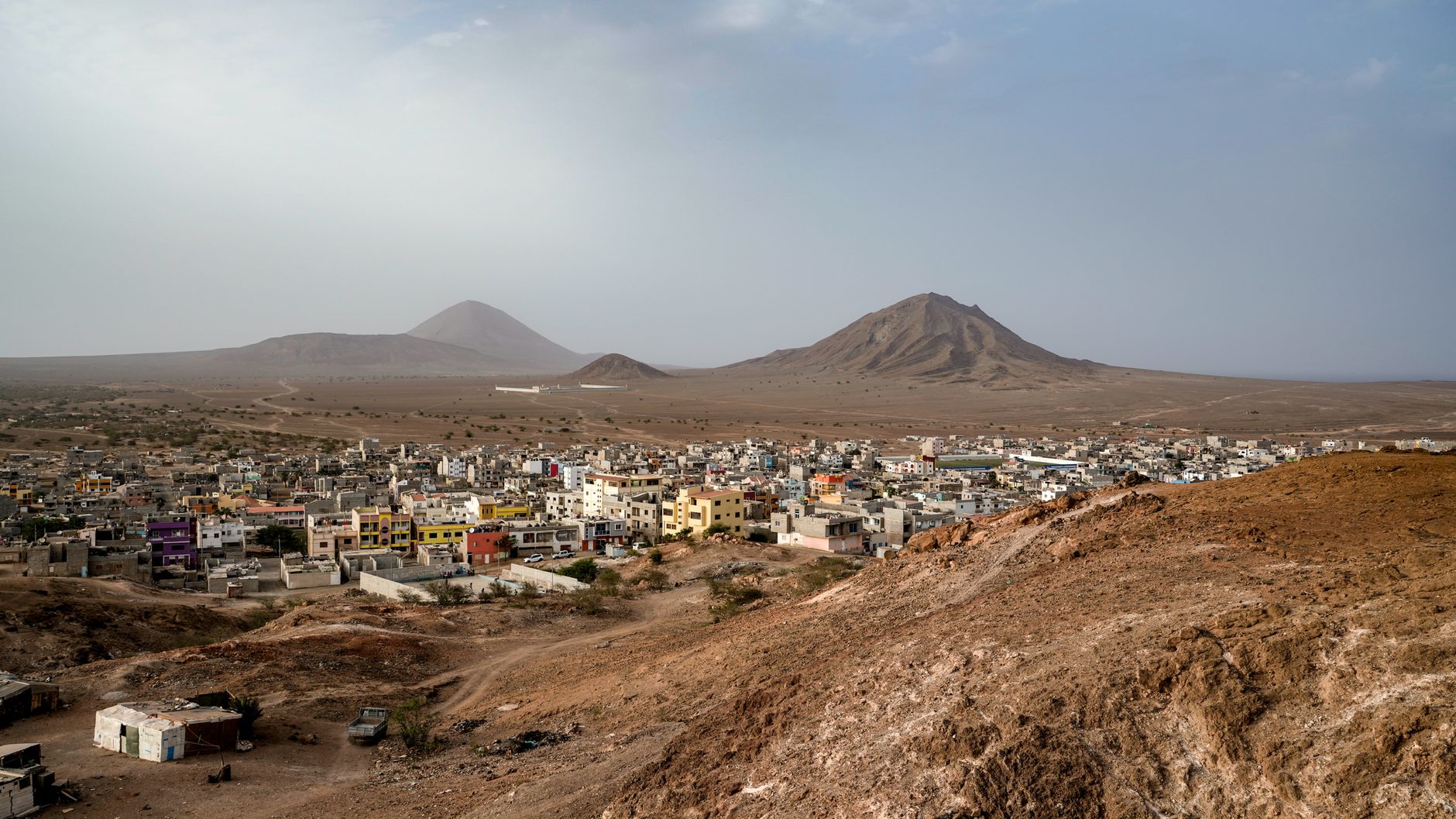
Discover how U.S. investors can defer capital gains taxes by exchanging into Cape Verde oceanfront property as World Cup catalysts approach.
American real estate investors sitting on appreciated property portfolios face a choice: pay 20% in capital gains taxes now, or defer indefinitely through a 1031 exchange. What if that exchange led to a cliffside estate overlooking the Atlantic, in a nation that just qualified for its first FIFA World Cup while sitting directly between two 2030 World Cup hosts? Welcome to Cape Verde—and the investment thesis that is quietly becoming impossible to ignore.
What Is a 1031 Exchange?
Under Section 1031 of the U.S. Internal Revenue Code, investors can exchange like-kind property and defer capital gains taxes provided they meet strict timelines: 45 days to identify replacement property and 180 days to close. The strategy transforms illiquid, tax-heavy gains into appreciating assets without triggering an immediate taxable event. Historically, domestic real estate dominated 1031 exchanges. But the rules do not restrict destination geography—only the nature of the replacement property.
Why Cape Verde Is Emerging as the 1031 Exchange Destination
Cape Verde—a 10-island archipelago 350 miles west of Senegal—combines political stability, European flight access, and euro-pegged currency risk mitigation that few emerging markets can match. Direct routes from Lisbon, Paris, Amsterdam, and Munich place Santiago Island within a 6-hour flight of major European capitals. The Cabo Verdean escudo's 1:1 peg to the euro eliminates currency volatility for eurozone investors, while the stable CVE peg provides predictable cost structures for dollar-denominated portfolio builders.
“Cape Verde qualified for its first-ever FIFA World Cup in 2026. With Portugal and Morocco co-hosting the 2030 tournament, Cape Verde sits directly in their path—a geographic and economic bridge between two World Cup nations.”
The Chão Bom Opportunity: Phase II Waterfront Lots
Chão Bom is a 120-hectare eco-luxury resort development on Santiago Island's dramatic northern Atlantic coast, positioned above Tarrafal Bay with cliffside oceanfront topography. Phase II waterfront lots are available at $250,000 per parcel. Infrastructure is complete: paved roads, underground utilities, and potable water via a 40,000-liter reservoir system. Direct European flights into Praia International Airport (15 minutes from the property) provide logistical accessibility that competing markets cannot match.
Legal Framework and Foreign Ownership
Cape Verde allows foreign land ownership through a 50-year Deed of Trust renewable for an additional 50 years—a structure recognized under Cape Verdean law and compatible with standard title insurance products. Foreign buyers can hold property in their personal name or through a corporate entity. The process involves obtaining a fiscal number (NIF), opening a local bank account, and completing registration at the local conservatory. No special visas are required for ownership, though a local legal representative is advisable for transactional matters.
Financing and Payment Structure
Guaranteed institutional financing covers up to 70% of lot purchase price, reducing capital requirements to $75,000 upfront on a $250,000 waterfront lot. This financing structure—uncommon in emerging market contexts—signals institutional confidence in the development's trajectory and reduces investor exposure during the hold period. Combined with Cape Verde's zero-restriction repatriation of funds, capital mobility is preserved alongside tax deferral.
“Phase II waterfront lots at $250,000 with guaranteed institutional financing up to 70%—meaning $75,000 in capital unlocks a fully infrastructured Atlantic cliffside asset positioned between two World Cup hosts.”
1031 Exchange Cape Verde: FAQ
Can a U.S. investor use a 1031 exchange to buy property in Cape Verde?
Yes. The IRS does not require the replacement property to be located in the United States—only that it be like-kind real property held for investment or business purposes. A Cape Verde oceanfront lot qualifies as like-kind property under Section 1031 guidelines. Investors should consult with a tax advisor experienced in cross-border exchanges and consider using a Qualified Intermediary to facilitate the transaction and ensure compliance with both U.S. and Cape Verdean regulations.