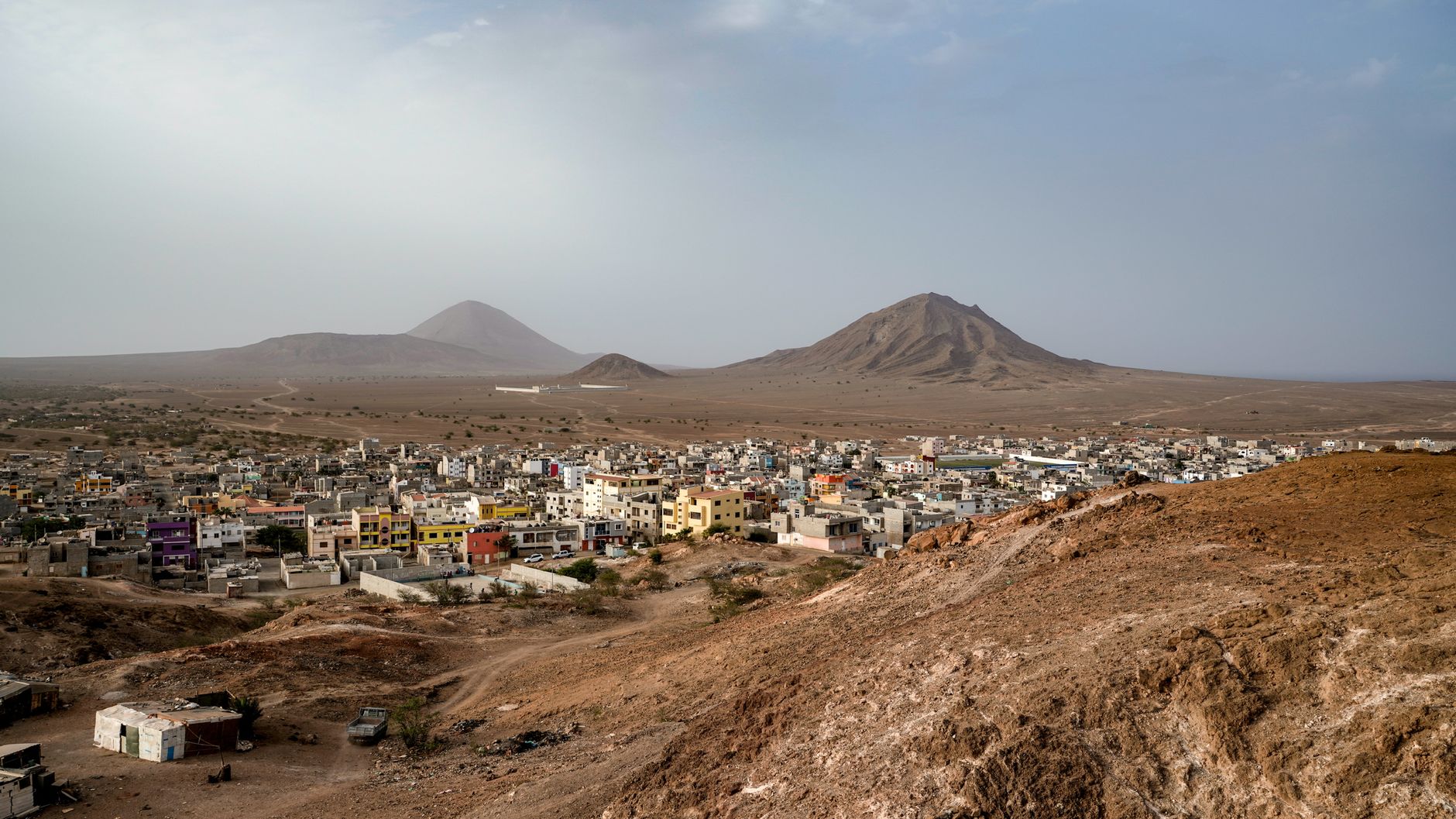
Where volcanic grandeur meets Atlantic infinity. Discover why Fogo Island's panorama from Chão Bom's clifftop represents one of the most compelling…
From the clifftop terraces of Chão Bom on Santiago Island's northern coast, Fogo rises 2,829 meters into the Atlantic sky—one of the world's most visually arresting volcanic silhouettes. For eight months of the year, its snow-capped summit glows above the clouds at distances exceeding 40 kilometers. This is not a background view. It is the view: a geological exclamation point that has defined Cape Verde's identity for five centuries of maritime navigation, artistic expression, and now, luxury real estate investment.
The Volcanic Backdrop That Defines Cape Verde
Fogo (Portuguese for "fire") is Cape Verde's most iconic geological formation—a stratovolcano so dominant that it serves as the visual anchor for sailors approaching from any direction. Unlike dormant volcanic landscapes elsewhere, Fogo remains active, with its most recent eruption occurring in 2014-2015. The volcano's crater hosts Cha das Caldeiras, a UNESCO-recognized agricultural zone where unique vineyards and farming communities thrive in volcanic soil, producing the archipelago's only DOC-certified wines. From Chão Bom, this ancient caldera forms a near-perfect cone visible across 40 kilometers of open Atlantic—a vista that commands premium valuations in any coastal real estate market.
“Fogo's summit reaches 2,829 meters, making it the highest point in Cape Verde and one of the most visually dominant volcanic formations in the Atlantic Ocean.”
The Atlantic Panorama from Tarrafal Bay
Chão Bom occupies a privileged position above Tarrafal Bay, Santiago Island's premier northern beach destination. From the development's clifftop parcels, the Atlantic unfolds in a continuous gradient from shallow turquoise to abyssal blue. Fogo dominates the southern horizon, its mass often creating its own weather systems—afternoon cloud formations cascade down its flanks like inverted waterfalls, visible from distances of 35 to 50 kilometers depending on atmospheric conditions.
Tarrafal Bay: Cape Verde's Most Secluded Coastal Haven
Tarrafal Bay's geography provides natural protection from the Saharan harmattan winds that affect the archipelago's eastern islands, maintaining microclimate